After drying out from the RSGB IOTA contest last weekend, we took the gear out again 1-2 August, where I worked a few new contacts: 7Q7BP on CW was a firm favourite, as well as KH6/AA1LC in Hawaii, CY0/VA1AXC on Sable Is., 8P6FX in Barbados and CP6XE in Bolivia.
During the weekend we turned our hand towards the RSGB low-power backpackers contest working a few on 2m. After the contest, HA6KVC/P was coming through nicely via Meteor Scatter on FSK441.
This was the first time I have ever heard any meteor scatter… Ever…
Having attended a short talk by Steve M0SHQ at Essex Ham about operating Amateur Satellites, and seeing Steve work the ISS via APRS, I decided to have a go myself. I built the dual-band beam he recommended several times, but the design always measured up poorly. In the end I tweaked the design somewhat, and come up with something myself – it’s all credit to the original designer, I just optimised it with some antenna modelling software. Details on the antenna can be found here: Dual Band Satellite Yagi.
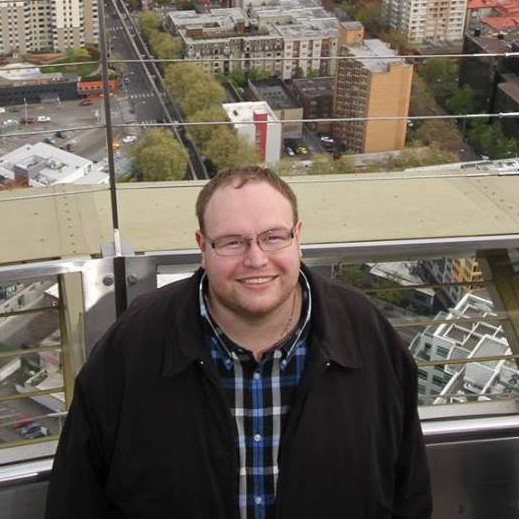
Today I arrived in Seattle. It’s my first visit to the United States. I have come for the IPSN’15 conference, part of CPS Week 2015. I have added a couple of days extra on to the trip to explore a little.
Over the past week or so, I have been playing around with DStarRepeater and ircDDBGateway to learn a bit about DSTAR repeaters, given the progress GB7KH‘s NoV is making. I have made a simplex hotspot with my FT817 and a soundcard interface, although I can see that there is certainly room for improvement. I have ordered a DVRPTR_V1 GMSK interface which has been dispatched so that will replace the soundcard, lowering the CPU load. I am to have the system set up on a Raspberry Pi 2 B, which was released yesterday (maybe today actually). I think I now understand how to tune up those Chinese notch filters, too.
Today my Icom IC-7000 and associated separation kit sold on eBay. I have wrapped them up for posting. I’ll be sad to see the IC7000 go, since it’s been my main workhorse for a long time – It’s been everywhere, that radio; from the university office to touring around Europe! I’ve replaced it with the IC7100 for DSTAR use, as well as an IC7700 (which I have had for a while).
Another batch of QSL cards arrived this morning for M1GEO, MQ1GEO and MO1GEO. I had unfortunately run out so I have ordered another batch of my own cards. They will take a week or so to arrive. I’ll get them out as soon as I can. I also ordered another batch for GB0SNB too, while I was at it!
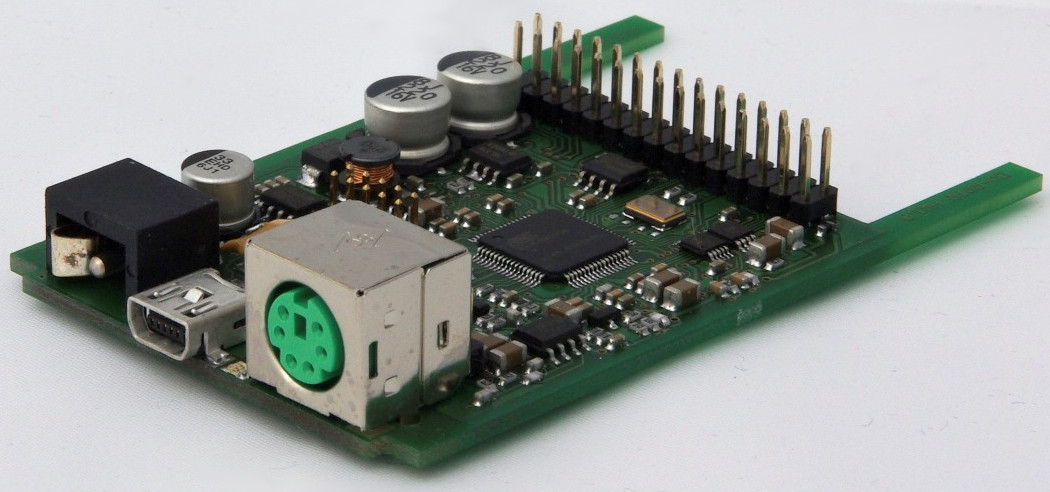
Today I finished my 4 month stint at ARM Ltd. During my time I haven’t done much with the website, but I have been working on my implementation of a fully KISS compliant Arduino TNC as well as using DSD 1.7 to decode digital modulation such as D-STAR and DMR (and others) using my FunCube and RTL-SDR receivers.
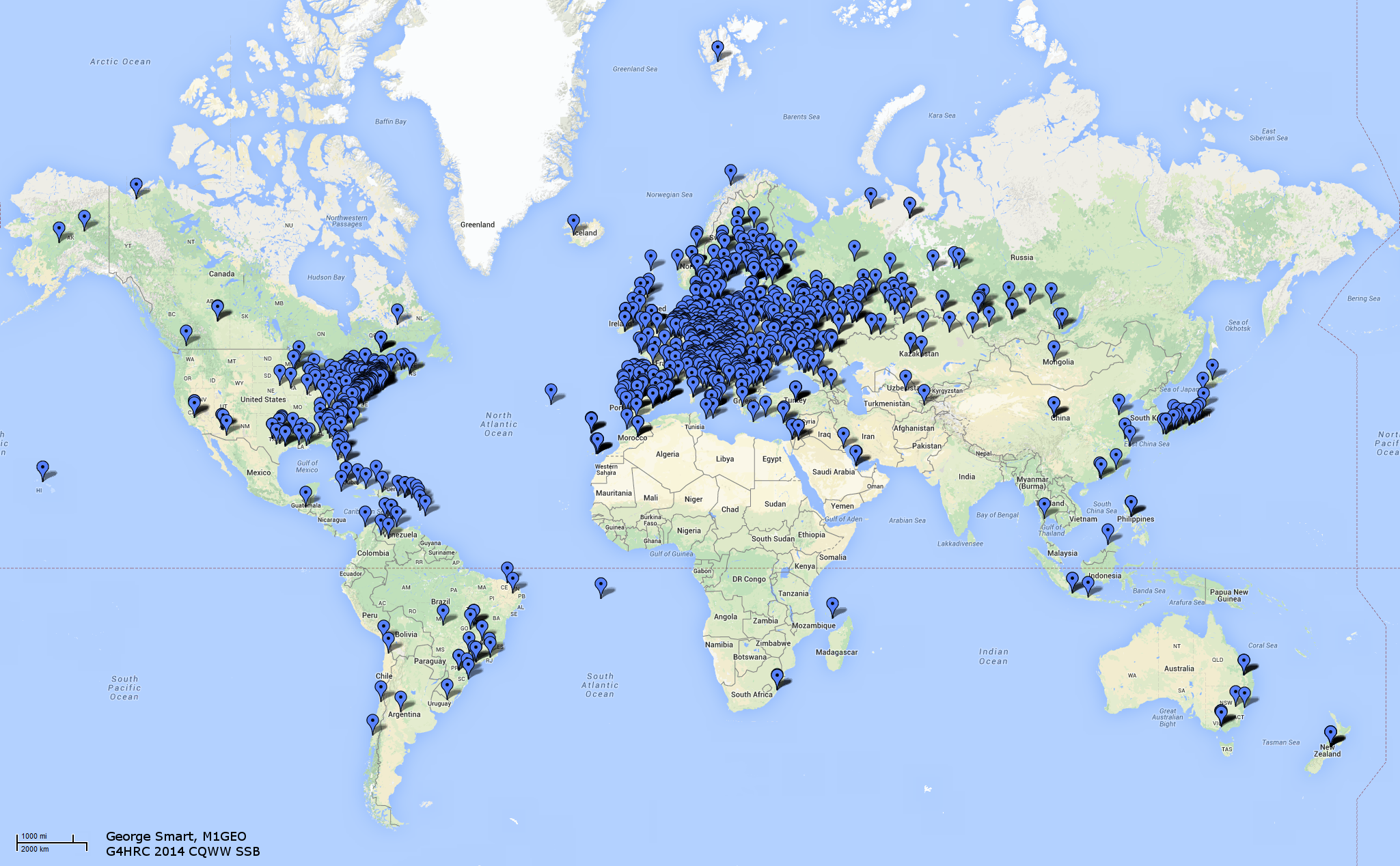
I’ve been doing CQWW as a somewhat casual attempt to work some DX for the past few years, but this year I took it to the next level to organise an event with my local radio club.
There is a full analysis of the log for the weekend, including the KML files from which the following were taken. Where information is not available for a given callsign, the pin has been inserted into the centre of each country with an asterisk or question mark to indicate.
For the rest of the log analysis, please click 2014 CQWW SSB
Today I purchased an Icom ID-5100 and fitted inside the car. I have been eating up the miles driving back and forth to Cambridge on my industrial secondment.
An online scrapbook full of half-baked projects and silly ideas.